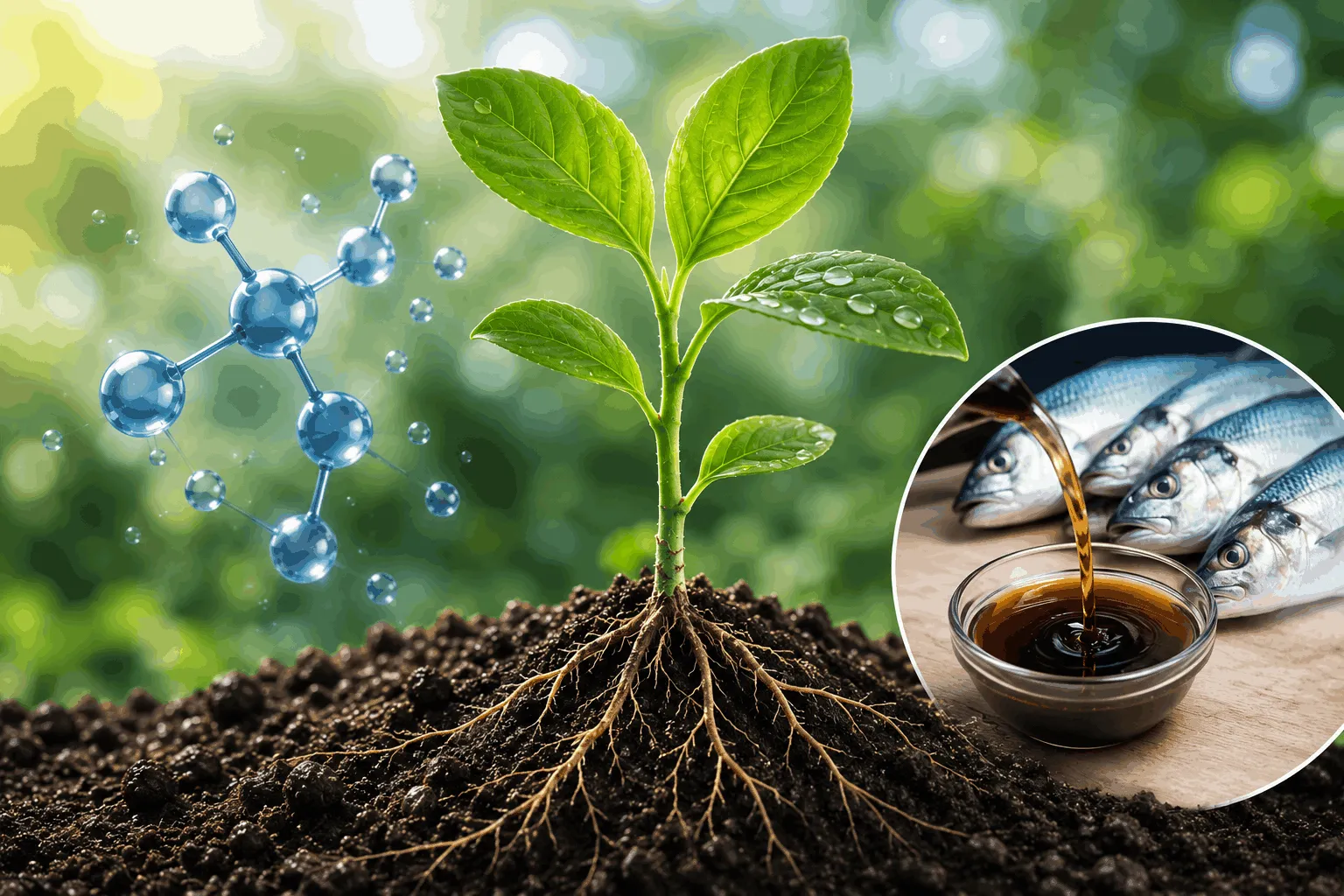
Understanding Amino Acids in Fish Hydrolysate: Why Plants Love Protein
Fish hydrolysate is often described as a “natural fertiliser,” but its real power goes far beyond basic nutrients. What makes fish hydrolysate unique is not just what it contains, but how those nutrients are delivered—specifically through free amino acids and short-chain peptides.
These biologically active compounds play a direct role in plant uptake, metabolism, and stress resilience, making fish hydrolysate one of the most efficient inputs in organic and regenerative systems.
What Are Free Amino Acids and Peptides?
Free amino acids are single, unbound amino acid molecules.
Peptides are short chains of amino acids created during enzymatic hydrolysis.
Unlike whole proteins, these compounds do not need to be broken down further by soil microbes or plant enzymes. They are immediately available for biological use.
Fish hydrolysate typically contains a diverse range of amino acids such as glycine, glutamic acid, aspartic acid, proline, and alanine—many of which are directly involved in plant metabolic pathways.
- Faster Nutrient Uptake (Chelation Effect)
Free amino acids act as natural chelators, binding to micronutrients like iron, zinc, manganese, calcium, and magnesium.
This chelation:
Keeps nutrients soluble in soil and on leaf surfaces
Prevents nutrient lock-up in high pH or saline soils
Improves uptake through roots and leaves
In practical terms, plants can absorb amino-acid-bound nutrients more efficiently than inorganic salts or larger organic molecules.
- Energy Savings Inside the Plant
When plants absorb nitrate or ammonium, they must expend energy converting that nitrogen into amino acids before it can be used for growth.
Fish hydrolysate short-circuits this process:
Nitrogen is already in amino form
Less metabolic energy is required
More energy is available for growth, flowering, and fruit fill
This is especially important during stress periods such as heat, cold, drought, or transplant shock.
- Improved Stress Tolerance and Resilience
Certain amino acids play direct roles in plant stress response:
Proline helps regulate osmotic pressure during drought and salinity stress
Glycine supports chlorophyll synthesis and photosynthesis
Glutamic and aspartic acids act as nitrogen transport molecules within the plant
Peptides also act as biostimulants, triggering enzymatic and hormonal responses that improve recovery after stress events.
- Root Growth and Microbial Stimulation
Amino acids are a preferred food source for soil microbes. When applied to soil:
Microbial populations increase rapidly
Nutrient cycling accelerates
Root–microbe interactions strengthen
Healthier microbial activity leads to better root architecture, improved nutrient availability, and stronger overall plant performance.
- Foliar Uptake Advantages
Free amino acids and peptides are small enough to pass through leaf cuticles, making fish hydrolysate particularly effective as a foliar application.
Benefits include:
Rapid correction of deficiencies
Improved leaf metabolism
Reduced leaf burn compared to salt-based fertilisers
This makes fish hydrolysate ideal during key growth stages when rapid nutrient support is needed.
Why Enzymatic Hydrolysis Matters
Not all fish products are equal. Enzymatic hydrolysis preserves:
Heat-sensitive amino acids
Peptide integrity
Biological activity
High-heat fish emulsions often denature proteins, reducing amino acid availability and biostimulant value.
The Takeaway: Protein That Plants Can Actually Use
Plants don’t “eat” protein in the traditional sense—but they love amino acids and peptides.
Fish hydrolysate delivers nitrogen in its most biologically efficient form, while also enhancing nutrient uptake, microbial activity, and stress resilience. The result is not just faster growth, but stronger, more balanced plants built from the inside out.
In modern regenerative and organic systems, fish hydrolysate isn’t just a fertiliser—it’s a metabolic support tool for plants and soils alike.
Related articles
- Fish Bio-Bone vs Traditional Bone Meal: Which Is Better?
Discover the differences between Fish Bio-Bone and Traditional Bone Meal for soil health, nutrient release, and organic gardening compatibility.
- The Nutritional Benefits of ExcelCrop's Bio-Bone
Explore the science of fish bio bone meal, its benefits, and applications in agriculture and aquaculture for healthier crops and fish.
- Top Benefits of Seaweed Fertiliser for Your Garden
Discover the advantages of seaweed fertiliser, enhancing plant growth and health. Learn how to use it effectively in your garden.
Ready to put this into practice? Explore our Pure Fish Liquid fertiliser, Liquid Seaweed or the full organic fertiliser range.